The 3-minute test every owner should take
Hi there
Before we get into this week’s reading, a quick personal note: I am opening up a very limited number of one-to-one coaching spaces this year, working directly with business owners on growth, profit and building toward a strong exit. If that is something you have been thinking about, just hit reply and we can discuss whether there is a fit. I keep the numbers deliberately small, so move quickly if you’d like to secure a spot.
Right, let’s get into the rest of the newsletter!
Your business, scored in three minutes
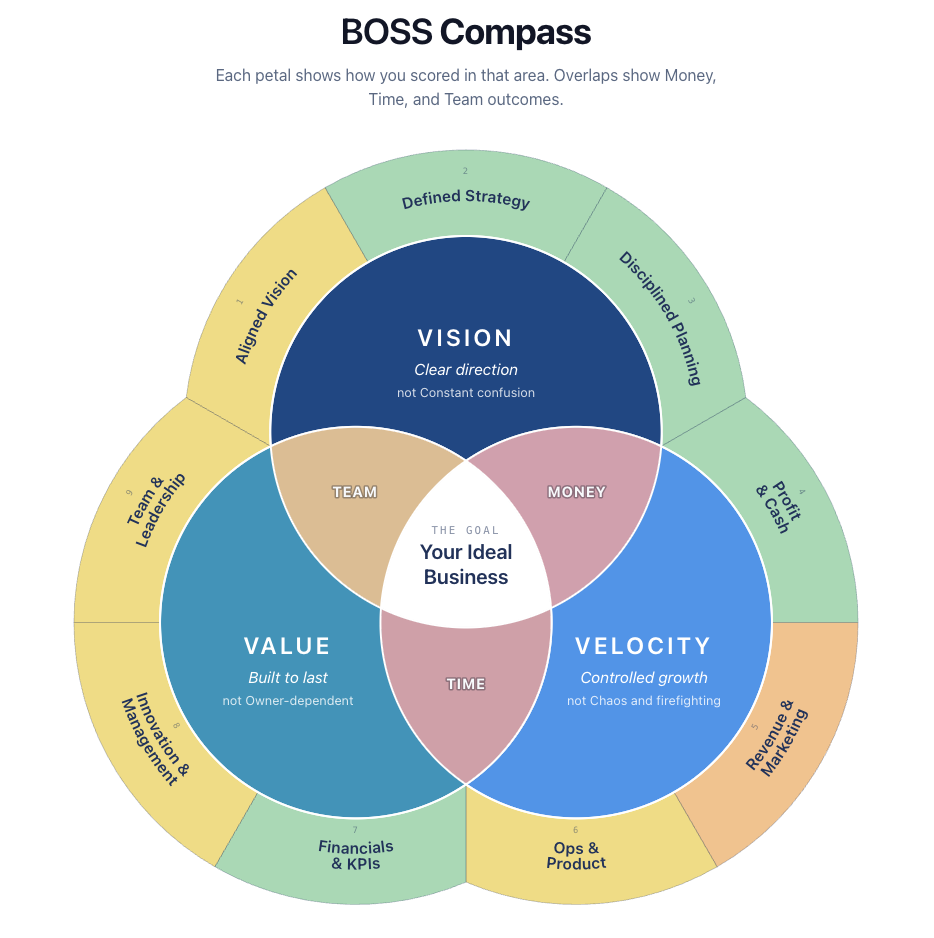
I have launched something I think you will find useful, and it is free. The BOSS Scorecard is a three-minute test that gives you a quick, honest snapshot of how your business is really doing across the areas that matter most, then shows you where to focus next. Most owners are too close to their business to see it clearly. A simple, structured score cuts through and tells you, in plain terms, which part of the engine needs attention first. It is the same diagnostic thinking I use with my coaching clients, distilled into an online tool. Take the test and see where you land. Get your score here.
Tate & Lyle leaving London is a lesson in who gets bought
Tate & Lyle has agreed a £2.7bn all-cash takeover by US rival Ingredion, ending an 87-year run on the London Stock Exchange. The shares jumped more than 30 per cent once talks surfaced, and the board is recommending the deal. Strip away the headline about another UK name lost to an American buyer, and the owner’s lesson is simpler: businesses with genuine specialist value get bought, often by a larger player who wants the capability rather than the logo. Tate & Lyle spent years repositioning from bulk sweeteners to speciality ingredients. That focus is exactly what made it a target. Read the article here.
Goldman’s record trillion tells you the deal window is open
Goldman Sachs has advised on more than $1 trillion of announced mergers and acquisitions in the first half of 2026, the fastest any bank has reached that mark in a half-year, according to Dealogic figures the firm shared. For owners, the read-across is not about Goldman. It is about timing. When the largest advisers are this busy, capital is moving, buyers are active and appetite is high. That is the environment in which well-prepared businesses command premiums and unprepared ones get picked off cheaply. If selling is anywhere on your horizon, a hot market rewards the owner who is ready before the phone rings. Read more here.
A $60bn exit in under four years, and what it really signals
SpaceX has agreed to buy Anysphere, the company behind the AI coding tool Cursor, for around $60bn in an all-stock deal. The founders left MIT in 2022; less than four years later they have one of the largest exits in tech history. The eye-watering number is not the lesson. The lesson is that the arc from start-up to strategic asset is compressing, and buyers now pay enormous sums for a team and a capability that fits their roadmap. You do not need a $60bn outcome to apply the principle: build something a specific acquirer would find hard to replicate, and you change the entire conversation about price. Get the story here.
The definition of a successful exit is shifting
A thoughtful piece in Entrepreneur argues that exit and liquidity are no longer the same thing. Exit means the final chapter, ownership changing hands through a sale or float. Liquidity means turning ownership into cash without necessarily selling the whole company. More founders are taking partial chips off the table, through secondaries and minority sales, while staying in the driving seat. For owners who love the business but want to de-risk personally, this matters: you may not have to choose between all-in and all-out. Designing a partial liquidity event can fund your life and keep your upside. Read the piece here.
PwC’s AI report is unexpectedly good news for human skills
PwC’s 2026 Global AI Jobs Barometer finds the labour market splitting into two paths, and the surprise is which one pays. As AI handles more execution, employers are placing a higher premium on judgement, creativity and leadership, the things machines make scarcer rather than cheaper. Companies most able to use AI are expanding hiring, not shrinking it. For owners building a team, this reframes recruitment: stop hiring for tasks AI will absorb, and start hiring for the human capabilities that become more valuable as everything else gets automated. The businesses that win will pair cheap execution with scarce judgement. Read more here.
GE Aerospace built the brand before the product existed
GE Aerospace carries a $210bn order backlog for engines that do not yet fly. Its chief brand officer told The Drum that brand is precisely what made those orders possible: customers committed to a promise, years ahead of delivery, because they trusted the name behind it. This is the part owners underrate. Brand is not decoration you add once the product is proven. It is the asset that lets you sell, hire and raise before the proof exists. Building reputation early is what turns a credible pitch into a signed order. Start treating your brand as infrastructure, not marketing spend. Read the article here.
FedEx shows a turnaround is just a few priorities, repeated
Four years into Raj Subramaniam’s tenure as chief executive, FedEx’s long turnaround is facing its next big test, and the strategy behind it is refreshingly plain. He reshaped the entire company around four priorities: growing in higher-margin verticals, transforming the network, using data and technology better, and cutting costs. No grand reinvention, no fashionable pivot. Just four things, pursued relentlessly across years. That is the part owners miss. Turnarounds and step-changes rarely come from a clever new idea; they come from picking the few levers that actually matter and refusing to be distracted from them. Pick your four. Then hold the line. Read more here.
AI prompt of the week: the focus audit
Most owners are spread too thin and know it, but cannot see which activities to cut. This prompt forces a ruthless outside view of where your time and money actually go versus where the value is created. Run it with your real numbers and an honest description of how you spend a typical week; vague inputs produce useless advice.
“Act as a no-nonsense business strategist reviewing my company for focus and leverage. I will describe the business: [sector, revenue, profit, team size, my main weekly activities, the products or services we offer ranked by revenue and by margin, and the two or three things I believe drive most of our growth]. First, identify which activities and offerings are most likely consuming disproportionate time and resource relative to the value they create, and explain your reasoning as an investor would. Second, name the single area where greater focus would most improve both profit and eventual sale value, and why. Third, give me a 90-day plan to concentrate effort there, including what to stop doing, what to delegate, and what to systemise, with the specific evidence a future buyer would want to see. Finish with the one uncomfortable question about my business I am avoiding.”
Run it quarterly. Focus is the cheapest growth lever you own.
The BOSS Compass explained
Rather than a framework infographic this week, I want to put the BOSS Compass in front of you properly, because it was built exactly for leaders of companies, like many of you who read this newsletter. The graphic below is just one of the practical outputs of the BOSS Scorecard test. It helps frame visually where you are and what needs more focus. Think of it as a quick health check from an outside perspective, the kind of clarity that is hard to get when you are in the thick of running the thing. If the result sparks a bigger conversation, that is exactly what my coaching spaces are for.
Here is the link to it again: theprofitcoach.com/score/adam.
Drop me a line
Have you taken the BOSS Scorecard yet? Hit reply and tell me what surprised you about your result, or which area you are choosing to focus on first. I read every response, and the best ones often shape future issues.
Cheers!
Adam