Lessons From The Olympics: The Power Of Incremental Improvements

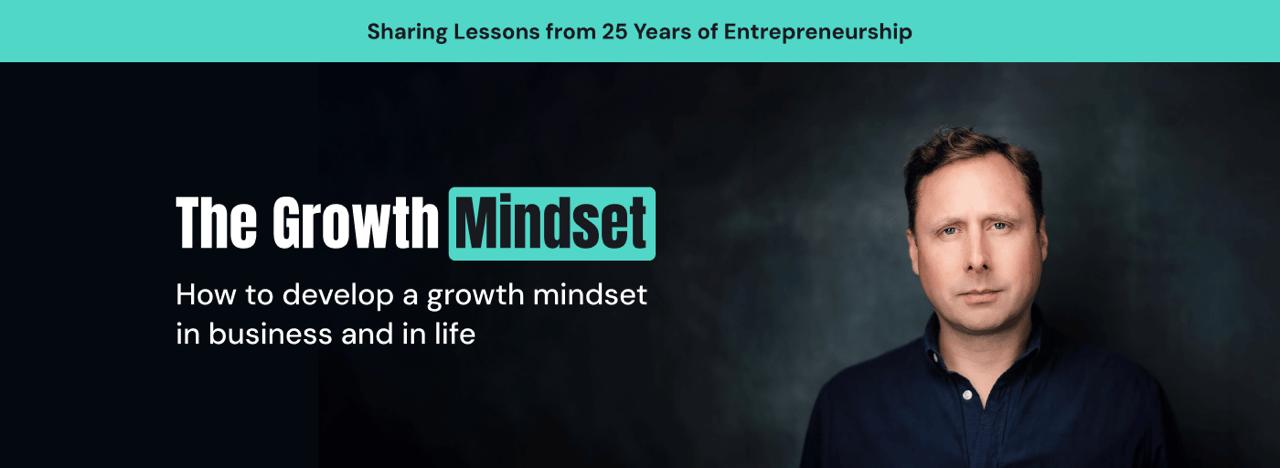
Welcome to the very first edition of The Growth Mindset.
In this newsletter, you can expect actionable tips for business and life based on my experience of 25 years as an entrepreneur.
I’m hugely excited to get started and provide as much value as I can with this newsletter.
My LinkedIn has grown from 12k to 21k followers in the last couple of months, so I sincerely hope this newsletter resonates as well as my LinkedIn content seems to be.
Who is this newsletter for?
Anyone from aspiring entrepreneurs, current business owners and people simply looking to adopt a growth mindset and broaden their view of business.
Every week, I’ll be covering three topics;
- Growth Spotlight: Here I’ll dive into an interesting topic relating to a growth mindset.
- Growth In Business: Using my experience, I’ll share all on how to buy, build and sell businesses.
- Growth Q&A: In this section, I will answer questions from you relating to building, buying and selling businesses to the best of my ability.
At the bottom of each email, there will also be a link to the Growth Toolkit, where you can find high-res versions of my most popular cheat sheets, plus some other tools and items that are exclusive to this newsletter.
This week, I’ll be covering:
- Growth Spotlight: The Power Of Incremental Improvements
- Growth In Business: Using The EOS Model To Grow Your Business
- Growth Q&A: How Do You Develop An Entrepreneurial Mindset?
Before we go further, as this is a brand new newsletter, can I please ask that you send me a quick reply just saying "Yep" so I know you received the email ok? This helps warm up the domain and tells Google, and other email providers, that you actually want to receive these messages.
Thank you!
Growth Spotlight
The Power Of Incremental Improvements
This year has been a significant one for sport. The Euros, the Paris Olympics, Wimbledon, and Tour de France all within the span of a couple of months.
Like many others, I'm in constant awe of what it takes to become an elite athlete. Behind the scenes, there is a humongous amount of effort that goes into gaining every possible edge.
The concept of finding these marginal gains is best exemplified by coach Sir David Brailsford who developed the 'Theory of Marginal Gains' notably with the British Cycling team. They went from nothing to winning 70% of gold medals from 2008 to the 2020 Olympic Games. A stratospheric rise.
Read on to learn more about the theory and how it can be applied to your business.
The Theory of Marginal Gains
Sir David Brailsford posited that if you break down every aspect of an athlete’s performance, and then make a 1% improvement in each, the cumulative gains will lead to a considerable enhancement.
This meticulous attention to detail extends beyond the obvious elements of training and equipment, encompassing every conceivable factor that might influence an athlete’s performance.
In Brailsford's case, he even went as far as changing the pillows that his athletes slept on to get better sleep. Hopefully, that puts into perspective how small these marginal gains can be.
Of course, these incremental improvements add up over time but there's also a lot to be said for the factor that this momentum plays into motivation. The feeling of making progress consistently plays its part in keeping you going.
Applying The Power Of Incremental Improvements To Your Business
This philosophy is also referred to as 'Kaizen' – a Japanese concept. A great example of this being applied to a business would be Toyota with their factory in Japan. It was fundamental to their success and efficiency:
- Their defect rates were reduced by 50% or more.
- They achieved cost reductions of 5-10%.
- There was a 20% reduction in lead times for production.
As a result, at my company JustFix, we've integrated the theory of marginal gains into our core operational philosophy.
In October 2022, early in JustFix's journey, we implemented a 'marginal gains board' on Trello. This board was a space where our tech team and other departments could log small changes they believed could enhance our platform.
For example, early on, we noticed a high bounce rate on our homepage, which was critical as it was the first touchpoint for potential customers. By making a series of small, data-driven changes – such as adjusting the layout, simplifying the navigation and improving the call-to-action – we managed to reduce the bounce rate significantly.
Will you be trying out this philosophy? If so, how? My advice is to start small. Begin by identifying areas where minor adjustments can yield significant results.
Growth In Business
Using The EOS Model To Grow Your Business
The Entrepreneurial Operating System (EOS) is a robust business framework developed by Gino Wickman and popularised in his book – Traction. This methodology helps organisations of all types streamline their operations and achieve their goals more effectively.
The system promotes clarity, alignment, and accountability, ensuring everyone in the organisation is moving in the same direction.
By focusing on six key components – Vision, People, Data, Issues, Process, and Traction – EOS provides a structured approach to improving business performance:
- Clarify Vision: Define and communicate the company’s long-term goals, creating a shared understanding across the team.
- Right People: Evaluate roles and ensure everyone is well-suited and motivated in their positions.
- Track KPIs: Establish and monitor key performance indicators to measure success and track progress.
- Address Issues: Conduct regular problem-solving meetings to tackle obstacles before they grow.
- Streamline Processes: Document and refine procedures to ensure consistency and efficiency.
- Maintain Traction: Hold quarterly and weekly meetings to review progress, set priorities, and keep the team accountable.
By diligently applying these principles, businesses can improve their operational efficiency, unify their team around common goals, and drive sustainable growth.
Growth Q&A
I’ve built many businesses over the years, with my latest endeavour being JustFix. It’s a home maintenance platform that connects tradespeople to anyone, anywhere in the UK.
Think of it as Uber for home maintenance. If you’re looking for some home maintenance, click the button at the bottom of the email to download the JustFix app. You can also find an exclusive discount code just for subscribers to this newsletter.
Every week, I’ll be opening up the floor for questions about building, buying and selling businesses, or general growth mindset topics. You can reply to this email with whatever you’d like to know.
Our first question is from Jessica:
That’s a great question Jessica, and something that a lot of people ask me.
My journey into entrepreneurship began 25 years ago while I was still at university. The internet was in its infancy then and I became obsessed by the potential I saw in it. I found myself devoting more and more time to teaching myself about the internet and less and less time studying for my degree.
I learnt to code, how to use Photoshop and Flash, how to make websites and administer servers. Through this process, I had the idea to start a new kind of internet radio station. One where the user had complete control over what they listened to, and when. This is commonplace now but, at the time, it was a novel concept.
Whilst still at University, I launched the first version of what would become known as iChoose Radio. Within a year, the company was starting to take off and I finally took the plunge and left university in order to focus on the business full-time.
We grew the user base, gained coverage on TV shows like "The Web Review" and we were the first people to stream live from Glastonbury in 2002. I sold the company one year later; my first exit. Shortly after this, Spotify launched and a few years after this, they went on to dominate the space.
The lesson I learned here is that, sometimes, being too early is as bad as being too late. In the late 90s and early 00s, internet usage was very different to how it is now. Spotify came along at just the right moment and managed to ride the wave of mass broadband adoption and changing behaviours towards internet usage at home and at work.
With my current company, JustFix, it feels like the timing is just right. Not too late, not too early. When I thought of the idea, I was surprised that nobody had done it already.
So, to return to the question, in short – I had become obsessed with the nascent internet, fallen out of love with academic study, felt an entrepreneurial urge growing within, and decided to take a risk and start a business! What could possibly go wrong?
Until next time,
Adam